When formulating a strategy for pathogen control and gut health, a common question arises: What organic acids are used in poultry, and which ones are most effective?
Not all acidifiers are created equal. Different organic acids have distinct chemical properties (pKa values) that determine their specific roles—whether it's sanitizing feed, controlling Salmonella, or inhibiting mold. Understanding these differences is key to selecting the right product.
Common Organic Acids in Poultry Nutrition
The most widely applied organic acids in the veterinary and feed industry include:
Formic Acid
Key Role: Bacterial control (E. coli, Salmonella) and pH reduction.
Why use it: Formic acid has a low molecular weight and high acidity, making it one of the most potent organic acids against gram-negative bacteria. It is the gold standard for feed sanitation.
Propionic Acid
Key Role: Mold inhibition.
Why use it: It is highly effective at preventing mold growth in stored grains and feed. While less effective against bacteria than formic acid, it is essential for preserving feed quality.
Acetic Acid
Key Role: Broad-spectrum antimicrobial.
Why use it: Often used in blends, acetic acid is effective against a wide range of microbes and aids in lowering gastric pH.
Butyric Acid
Key Role: Gut wall integrity.
Why use it: Unlike the others, butyric acid is primarily used as an energy source for enterocytes (gut cells), promoting villi growth and healing.
Single Acids vs. Blends

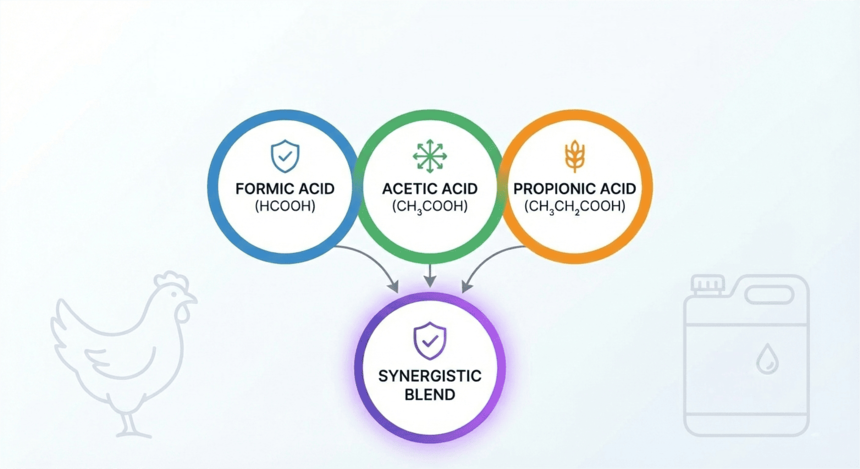
While asking "what is an example of an acidifier," one might point to pure formic acid. However, in modern practice, blends are superior.
Synergy: Combining Formic (for bacteria) and Propionic (for mold) creates a broad-spectrum shield that a single acid cannot provide.
Buffered Mixtures: Pure acids are corrosive. Industrial acidifiers are often buffered (ammonium salts) to be non-corrosive to equipment while remaining active in the bird's gut.
Conclusion
Selecting the right organic acid depends on your goal. For comprehensive biosecurity, a synergistic blend of formic and propionic acid offers the best balance of pathogen control and feed preservation.
