|
Why Poultry Water Sanitation Programs Fail Long Term (2026)
Across modern poultry production systems, water sanitation is widely recognized as essential. Most farms disinfect water lines, flush pipelines, or apply sanitizers on a routine basis. Yet poultry water sanitation failure remains a persistent industry problem. Contamination returns, biofilm reappears, and performance losses quietly accumulate. The issue is rarely a lack of effort. Instead, long-term failure usually stems from how water sanitation is conceptualized. Many programs are designed to solve short-term contamination, not to maintain continuous system stability. This article explains why poultry water sanitation programs so often fail over time—and what truly separates temporary improvement from durable control. Short-Term Disinfection Is Not Long-Term Water ControlOne of the most common causes of poultry water sanitation failure is the assumption that killing bacteria equals controlling the water system. In reality, these are two very different goals. Short-term disinfection focuses on reducing microbial counts at a specific moment. Long-term water control focuses on keeping conditions unfavorable for microbial regrowth every day. Many sanitation programs succeed at the first objective while completely missing the second. As a result, water may test clean shortly after treatment, only to deteriorate again within days. Unstable pH Is the Core Reason Most Programs Break Down
Water pH stability plays a central role in long-term sanitation success. Many poultry water sanitation failures trace back to systems that briefly reach an effective pH range but cannot maintain it. When pH fluctuates:
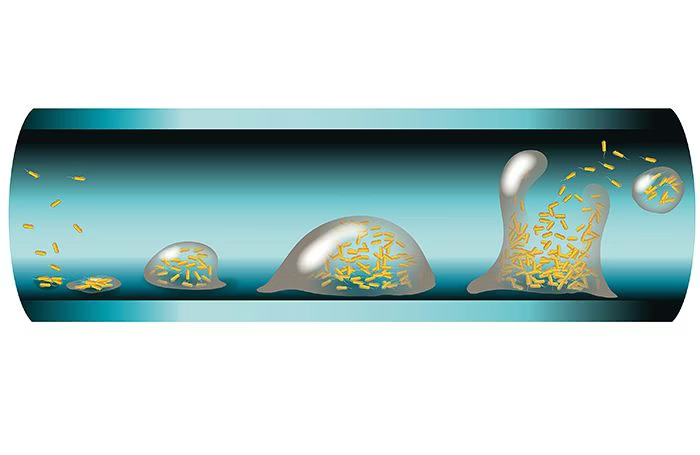
Programs built around unbuffered or weakly buffered treatments often deliver impressive initial results, followed by rapid loss of control. Without stable pH conditions, sanitation becomes reactive rather than preventive. Biofilm Is Suppressed—Not EliminatedAnother major contributor to poultry water sanitation failure is misunderstanding how biofilm behaves inside waterlines. Many sanitation protocols reduce planktonic (free-floating) bacteria while leaving the biofilm matrix largely intact. Biofilm acts as a reservoir, continuously releasing bacteria back into the water stream. This creates the illusion of sanitation success while contamination quietly rebuilds. That is to say, recurring contamination is closely linked to biofilm inside waterlines. As soon as treatment pressure drops, biofilm-driven recontamination resumes. Corrosion Risk Forces UnderdosingEquipment compatibility is an often-overlooked factor in long-term sanitation failure. Aggressive chemicals may control microbes effectively, but they also increase corrosion risk in metal fittings, valves, and drinkers. To protect infrastructure, farms frequently reduce dosage or shorten application periods. This compromise weakens antimicrobial pressure and accelerates system rebound. In many cases, poultry water sanitation failure is not caused by the sanitizer itself, but by the operational limitations it creates. Seasonal Stress Exposes Weak Water SystemsWater sanitation weaknesses are most visible during periods of heat stress. Higher temperatures increase bacterial growth rates while birds dramatically increase water intake. Under these conditions:
Programs that appear effective in cooler months often fail during summer, revealing a lack of system resilience. Repeating Stronger Disinfection Rarely Solves the ProblemWhen contamination returns, the typical response is to increase disinfectant strength or frequency. While this may temporarily suppress microbial counts, it rarely addresses the underlying causes of poultry water sanitation failure. Stronger treatments increase cost, equipment stress, and management complexity—without delivering lasting stability. Over time, this cycle becomes unsustainable. What Long-Term Water Sanitation Actually Requires
Sustainable water sanitation is not defined by how aggressively bacteria are killed, but by how consistently unfavorable conditions are maintained. Long-term success depends on three foundational principles:
Programs built around these principles achieve lower pathogen pressure, reduced biofilm recovery, and more consistent flock performance. Final PerspectivePoultry water sanitation failure is rarely the result of negligence or poor intent. It is usually the outcome of systems designed for short-term disinfection rather than long-term control. Farms that shift from episodic sanitation to continuous water system management gain a decisive advantage—not only in hygiene stability, but also in gut health consistency and overall production efficiency. |