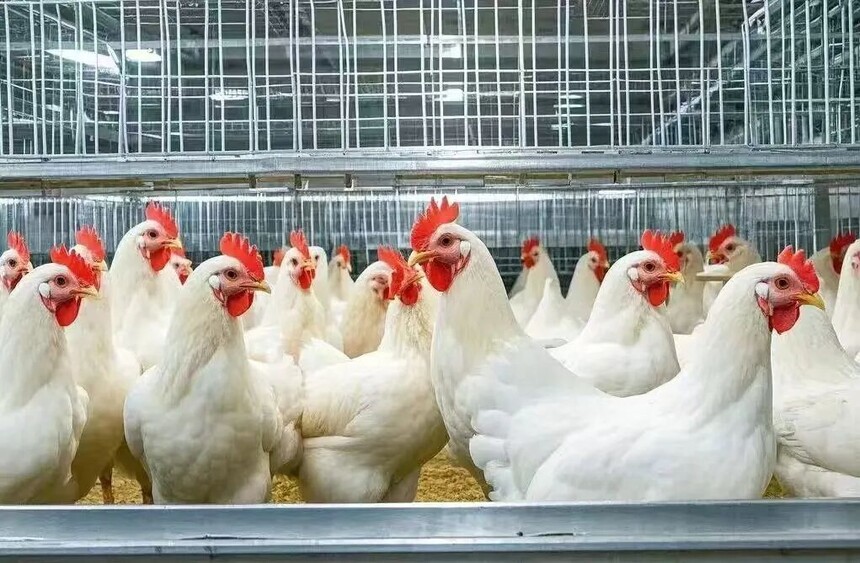
Introduction: The Crisis of Antibiotic Failure in Modern Poultry
For large-scale poultry operations, Salmonella remains one of the most persistent and costly threats during the brooding stage. In recent years, however, a more alarming trend has emerged: the failure of conventional treatment protocols.
When a farm with 500,000 birds faces an outbreak, the stakes are incredibly high. A delay in effective treatment doesn't just mean mortality; it means stunted growth, poor feed conversion ratios (FCR), and massive economic loss.
This case study analyzes a recent event at a major white feather broiler farm in Dandong, China. It documents a critical situation where standard antibiotic treatments failed due to resistance, and how the flock was saved through precise laboratory diagnosis and the application of Salmonella Phage technology.
For international distributors and farm managers facing similar "superbug" issues, this case provides a blueprint for treating drug-resistant Salmonella in broilers using non-antibiotic precision tools.
Case Background: The 500,000-Bird Challenge
Farm Profile:
Location: Dandong Region (Key poultry production zone)
Scale: 500,000 White Feather Broilers
Stage: Brooding Phase (0–21 days)
The Onset: Shortly after the chicks arrived and entered the brooding stage, the flock began exhibiting symptoms consistent with a severe bacterial infection. The farm management, experienced in standard protocols, immediately initiated their standard biosecurity and medication procedures.
The Failure of Conventional Medicine
The timeline of the outbreak reveals the frightening reality of Antimicrobial Resistance (AMR):
Phase 1 (Initial Treatment): Upon noticing the first signs, the farm administered a standard Salmonella purification product (likely a broad-spectrum antibiotic or chemical cleaner) for 4 consecutive days.
Phase 2 (Escalation): Between days 9 and 12, the farm switched to a different antibiotic treatment from another manufacturer, hoping a change in chemistry would halt the infection.
By the time the birds reached 6 days of age (during the initial failure), the farm managers realized they were flying blind. They collected pathological samples and sent them to the Yantai Jinhai Laboratory for urgent analysis.
Clinical and Pathological Analysis
To effectively solve a problem, one must first accurately define it. In high-density farming, "guessing" the disease often leads to wasted time and money.
1. Clinical Symptoms (The Visuals)
The flock exhibited textbook signs of a systemic Salmonella infection (Pullorum disease or Paratyphoid), but the severity suggested a highly virulent strain:
Severe Depression: The chicks were lethargic, showing little interest in their environment.
Huddling: Despite temperature control in the shed, birds were piling up (huddling) near heat sources, a classic sign of fever and systemic chill.
Anorexia: Feed intake dropped significantly.
Diarrhea: Paste-up vents and loose droppings were prevalent.
Stunted Activity: The overall vitality of the shed was dangerously low, predicting poor future weight gain.
2. Autopsy Findings (The Internal Damage)
Post-mortem examination of the culled birds revealed acute organ damage:
Heart: Nodular lesions were visible on the surface of the heart (granulomas), indicating the bacteria had entered the bloodstream (septicemia).
Liver: Distinct necrotic foci (white spots) were present on the liver. This hepatic necrosis is a hallmark of Salmonella toxins destroying liver tissue, severely impacting the bird's metabolism and ability to filter toxins.
The Jinhai Laboratory Solution: Precision Diagnosis
This is where the strategy shifted from "carpet bombing" with antibiotics to "sniper fire" with biotechnology.
Upon receiving the samples at the Jinhai Laboratory, the technical team immediately initiated a two-step protocol:
Step 1: Bacterial Isolation and Identification
The lab confirmed the culprit was indeed Salmonella. However, knowing the bacteria is not enough. The lab performed sensitivity tests which confirmed what the farm already suspected: this specific strain was resistant to the antibiotics previously used.
Step 2: Phage Typing (The "Key" to the "Lock")
This is the core differentiator in Yantai Jinhai’s approach. Unlike antibiotics, which kill bacteria chemically, Salmonella Phage are biological entities that infect specific bacteria.
The technical team screened the isolated Salmonella strain against Jinhai’s library of phages. They successfully matched a specific "Phage Cocktail" (a blend of phages) that showed high lytic activity against the farm's specific bacteria.
The Diagnosis: Multidrug-resistant Salmonella infection.
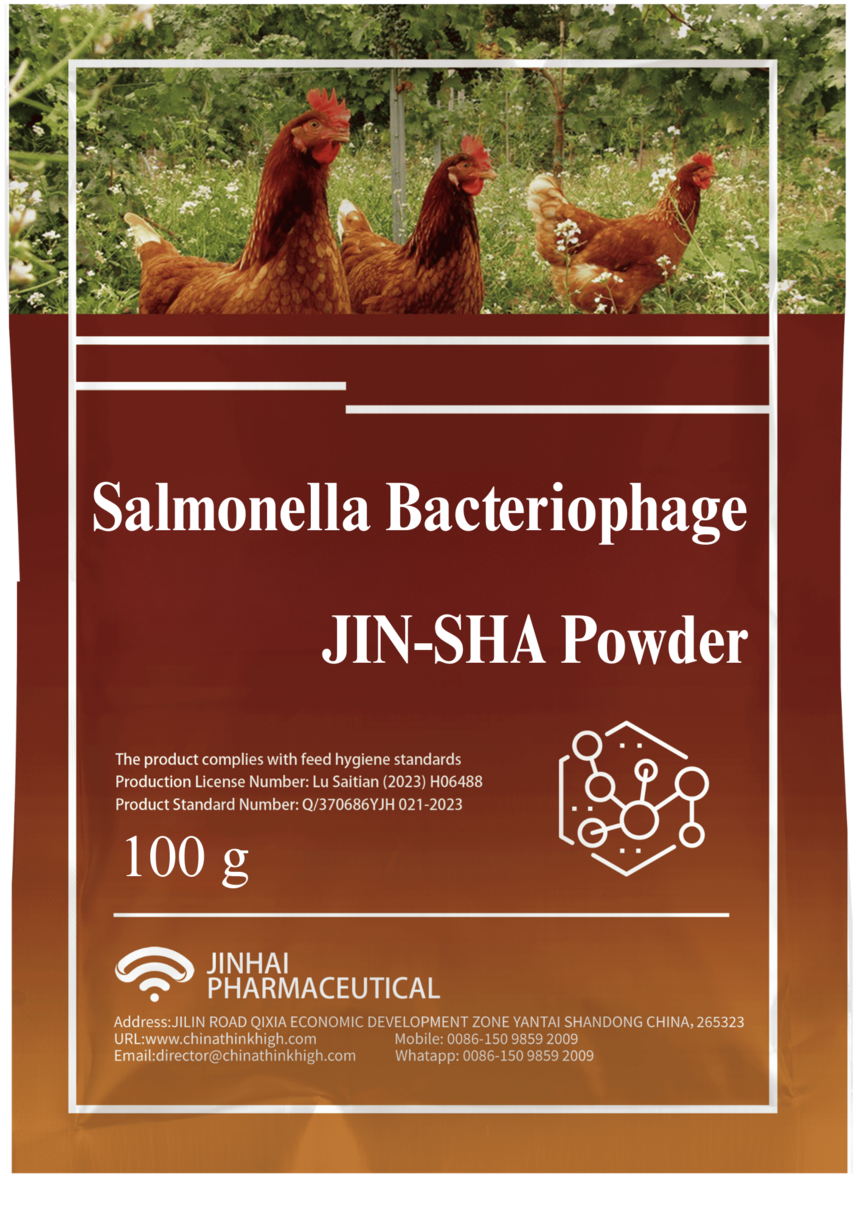
The Prescription: Targeted Salmonella Phage therapy (JIN-SHA powder by Jinhai).
The Treatment Protocol
Based on the lab results, a precise intervention plan was drawn up. The goal was to stop mortality immediately and restore gut function.
Timing: Intervention began at 16 days of age.
Dosage: 1 Bag of Water-Soluble Phage per 10,000 birds.
Duration: Continuous administration via drinking water for 3 days.
Why this timing matters?
By day 16, the birds had already suffered through two failed rounds of antibiotics. Their gut microbiome was likely decimated by the drugs, making them even more vulnerable. Phages are neutral to the animal's cells and beneficial gut flora, making them the safest option for fragile, stressed birds.
Results: The 72-Hour Turnaround
The speed of recovery highlights the efficacy of the lytic mechanism of phages.
| Timeline | Clinical Observation |
|---|
| Day 0 (Start) | Birds were depressed, huddling, and refusing feed. |
| Day 1 (24 Hours) | Immediate Impact: The mental state of the flock improved noticeably. Huddling behavior decreased, and the birds became more active. The "chirping" sound of a healthy flock began to return. |
| Day 3 (Conclusion) | Clinical Recovery: Symptoms virtually disappeared. Feed and water intake returned to standard curves. The flock's uniformity and growth trajectory were restored to healthy levels. |
The Outcome: The outbreak was halted. The 500,000-bird asset was secured without further use of harsh chemicals.
Analysis: Why Did Antibiotics Fail and Phages Succeed?
For the B2B distributor or veterinarian reading this, understanding the mechanism is crucial for selling or implementing this solution.
1. The Resistance Trap
The reason the first two treatments failed is Antimicrobial Resistance (AMR). Salmonella is notoriously quick at mutating. On large farms where antibiotics are used proactively or reactively without sensitivity testing, bacteria evolve pumps to eject the drug or enzymes to degrade it.
2. The Phage Advantage (Lytic Action)
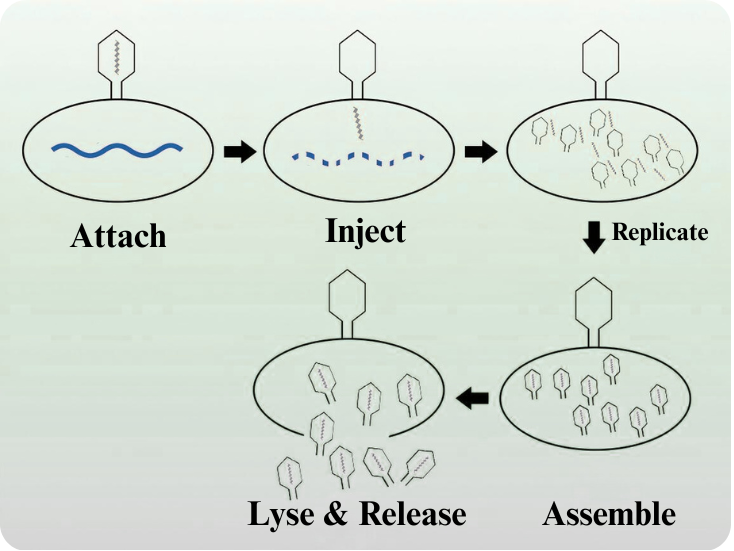
Bacteriophages operate on a completely different biological pathway. They do not rely on the bacteria's metabolic uptake (like antibiotics do).
Attachment: The phage attaches to the surface receptors of the Salmonella.
Injection & Replication: It injects its DNA, turning the bacteria into a phage factory.
Lysis (Explosion): The bacteria bursts open (dies), releasing hundreds of new phages to hunt down the remaining Salmonella.
This exponential replication means the "drug" effectively increases in dosage at the site of infection as long as the bacteria are present. Once the bacteria are gone, the phages are naturally eliminated.
Read More: For a deeper dive into the science, read our article: Salmonella in Chickens: A Guide to Phage Technology.
Economic Implications for Large-Scale Farms
In a flock of 50,000 birds, a 5% mortality increase is painful. In a flock of 500,000 birds, it is catastrophic.
By switching to Salmonella Phage therapy, the Dandong farm achieved three critical economic wins:
Stop Loss: Prevented the infection from wiping out a significant percentage of the stock.
Performance Protection: By resolving the infection quickly (3 days vs. weeks), the birds resumed growing. Chronic Salmonella infections lead to uneven flock sizes and high cull rates at the slaughterhouse.
Gut Health Preservation: Unlike the antibiotics used in the first 12 days, the phages did not destroy the beneficial bacteria. This ensures better nutrient absorption and poultry gut health moving forward.
Conclusion: A Model for Modern Disease Control
The experience of the Dandong broiler farm serves as a warning and a solution for the industry. Reliance on empirical antibiotic use is becoming increasingly risky.
The takeaways for global poultry producers are clear:
Diagnosis First: When standard drugs fail, stop guessing. Send samples to a lab capable of sensitivity testing.
Embrace Innovation: Phage therapy is no longer "experimental." It is a proven, industrial-scale solution for treating drug-resistant Salmonella in broilers.
Customization: One size does not fit all. Jinhai’s ability to match the specific phage to the farm’s specific bacterial strain was the deciding factor in this success.
At Yantai Jinhai Pharmaceutical, we specialize in solving these complex clinical challenges. Whether through high-quality chemical formulations or cutting-edge biologicals like our Salmonella Phage series, our goal is to secure your flock and your profitability.
Is your farm struggling with recurring Salmonella or E. Coli issues? Do not wait for resistance to result in heavy losses. Contact the Yantai Jinhai technical team today for a consultation and learn how our targeted solutions can protect your production.
Disclaimer: This case study is based on actual field data from Yantai Jinhai Pharmaceutical Co. Ltd. Results may vary based on farm management conditions and disease complexity.
