|
Improving Gut Health in Poultry: A Practical Farm Guide
Poultry gut health depends on how well birds digest and absorb feed, maintain an effective intestinal barrier, and sustain a stable microbial community under farm conditions. When feed conversion, growth uniformity, litter quality or livability changes, the gut may be involved. Start by investigating the cause before adding a product. This guide covers the chicken digestive tract, common farm pressures and practical ways to improve gut health in poultry production. It is intended for producers, veterinarians, nutritionists and poultry distributors working across different climates and production systems. What does a healthy poultry gut do?
The poultry digestive tract is a connected system. The crop stores feed briefly. The proventriculus adds acid and digestive enzymes, and the gizzard grinds and mixes feed. Most digestion and nutrient absorption take place in the small intestine. The paired ceca ferment some undigested material. Each section has its own environment and microbial population, so gut health cannot be judged by a single pH value or the presence of one “good” bacterium. A functional gut digests and absorbs nutrients, maintains the intestinal barrier, supports appropriate immune responses and sustains a balanced microbial community. When digestion is incomplete, more nutrients may remain available to opportunistic microbes. Inflammation or damage to the intestinal lining can also interfere with nutrient absorption and performance. A review of poultry gut health describes how the high feed intake of modern birds can put pressure on digestive physiology, and how dysbiosis and barrier disruption may contribute to intestinal inflammation. Seven practical strategies for improving gut health in poultry1. Establish a baseline before changing the programTrack performance by flock and age. Useful measures include daily feed and water intake, body-weight uniformity, mortality and culling, feed conversion ratio (FCR), and litter condition. Compare results with the farm’s historical data and relevant breed targets. A sudden change in the water-to-feed ratio, wet litter or uneven growth calls for investigation, but does not identify the cause on its own. If signs persist, ask a poultry veterinarian or trained field professional to examine representative birds. Necropsy findings, intestinal lesions, coccidial status, feed samples and laboratory tests may help distinguish nutritional, infectious and management causes. Droppings alone are not a reliable basis for treating a flock because similar signs can have different causes. 2. Test drinking water at the source and at the drinker
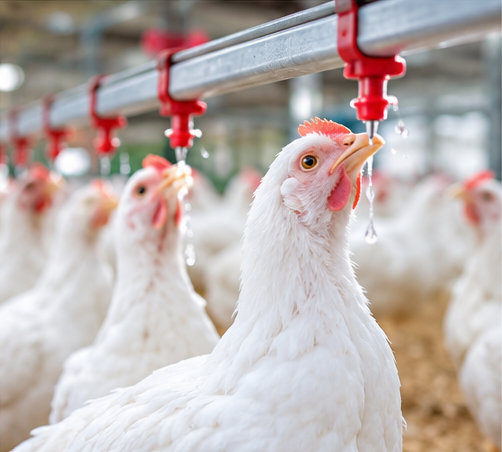
A clean well or municipal supply does not guarantee clean water at bird level. Water can become contaminated again in storage tanks and distribution lines, and biofilm can provide a surface where microorganisms persist. Research on commercial broiler houses points to the value of monitoring water lines as well as the original water source. Sample the incoming supply and representative points at the ends of drinker lines. A competent laboratory can assess microbiological quality and relevant chemistry, including pH, hardness, iron, sulfur and total dissolved solids. Nitrate may also be appropriate to test for in some situations. Inspect flow rate, pressure, leaks, tank covers, dead ends and sediment. Record the sampling location and time so you can interpret each result in context. Between flocks, clean and flush tanks and lines using a procedure compatible with the equipment and local requirements. During production, follow a planned monitoring and maintenance schedule. Normal acidification may be part of water management, but it does not remove established deposits or correct a contaminated source. 3. Review feed quality and transitions
Digestibility, ingredient quality, particle size, nutrient balance and feed form all affect what reaches the lower gut. Mycotoxins, rancid fats, poorly balanced protein and highly viscous non-starch polysaccharides can complicate intestinal function. Reviews of necrotic enteritis identify diet, coccidiosis, stress and environmental management as interacting factors. A single feed additive cannot address all of them. Keep feed storage dry and protected from pests. Check incoming ingredients and finished feed for quality issues, and ask a nutritionist to review amino-acid balance, energy, fibre and enzyme choices. Plan starter-to-grower and other ration changes carefully. Avoid overlapping them unnecessarily with major stressors such as transport, heat stress or vaccination. If performance drops after a feed change, compare batches and formulation records before adding several interventions. 4. Manage litter moisture and house stressorsWet litter affects bird welfare and can point to an underlying problem. Check drinker leakage and pressure, ventilation, stocking density, water chemistry, feed digestibility, salt and mineral levels, and enteric health. Birds may drink more in hot weather, while inadequate ventilation can make it harder to dry litter. Address the likely cause rather than relying on a litter treatment alone. Reduce avoidable stress with stable brooding, suitable temperature and ventilation, consistent lighting, careful handling, and well-planned vaccination and catching procedures. Strong biosecurity, rodent and insect control, and appropriate downtime can also reduce infectious pressure entering a flock. 5. Prioritize disease prevention and veterinary investigationCoccidiosis and necrotic enteritis can damage the gut and impair performance. Necrotic enteritis is associated with Clostridium perfringens and may be influenced by coccidial damage, diet and management. Clinical signs may overlap with other systemic or respiratory diseases in poultry (such as H9N2 or secondary E. coli infections), while subclinical problems may show up mainly as poor growth or feed conversion. Work with a veterinarian on diagnosis, vaccination, and prevention or treatment appropriate to the region. Acidifiers are not a treatment for a disease outbreak. 6. Use organic acids as one tool in a monitored programFormic, acetic and propionic acids are used in poultry feed or drinking-water programs for acidification and microbial management. Their effects depend on the acid blend and concentration, water alkalinity and buffering capacity, organic load, target organisms, administration route and exposure time. Research reviews describe potential benefits, but results vary across studies and farm conditions. Do not assume every product or flock will respond in the same way. For a drinking-water program, measure water quality where birds drink and monitor consumption after making a change. Excessive acidification can affect palatability or equipment. Follow the locally registered product label, check compatibility with vaccines, medicines and sanitizers, and consult a veterinarian or nutritionist before adjusting use. pH alone is not enough to determine an appropriate dose; source-water chemistry and product directions also matter. Yantai Jinhai Pharmaceutical’s Kingly Acid is a liquid poultry acidifier formulated with formic acid, acetic acid and propionic acid. Consider the product within a structured water-hygiene plan, alongside water testing, line cleaning, biosecurity and veterinary care. Confirm the current product label and market-specific documentation before publication or use. 7. Measure the responseWhere practical, make one planned change at a time. Record the start date, flock age, management details, water quality, intake and key performance indicators. Compare results with a suitable control or a well-matched historical baseline, accounting for season, feed batch, bird age and disease pressure. If the measure you expected to improve does not change, investigate before increasing the dose. What does the evidence say about acidifiers?A meta-analysis of broiler studies reported improved FCR with organic acids in birds without an imposed challenge. Responses differed under challenge conditions. The findings support considering organic acids as one management option, but do not show that every formulation or farm will achieve the same result. Jinhai’s internal field record describes two broiler houses, each with 32,000 birds. One house received a company acidifier in drinking water at a 1:1,000 dilution every other day for eight hours from day one; the other received no treatment. The record reports improved slaughter weight and survival, along with lower FCR, but the supplied report gives no numerical results. With only one house in each group, differences between the houses could have affected the comparison. Treat this as a field observation, not replicated proof of efficacy. A quick farm checklist
Frequently asked questionsCan an acidifier alone improve chicken gut health?An acidifier may support a broader water-hygiene and gut-health program. It cannot, on its own, correct contaminated feed, coccidiosis, poor ventilation, leaking drinkers or established disease. Diagnose and manage the whole system. Is there one ideal drinking-water pH for every poultry farm?No single target suits every water source and flock. Water chemistry, buffering capacity, equipment, bird response and local product directions all matter. Test and adjust with qualified technical guidance rather than copying another farm’s pH or dose. What should be checked first when litter becomes wet?Check for drinker leaks and pressure problems, then review water chemistry and intake, ventilation, temperature, dietary salt and minerals, feed quality, and enteric health. Wet litter can have several causes. A practical partner for poultry distributorsKingly Acid is one option for distributors and integrators seeking a poultry water acidifier based on formic, acetic and propionic acids. Yantai Jinhai Pharmaceutical has manufactured veterinary products since 1998 and operates GMP-standard workshops. For product specifications, export documentation or distributor enquiries, contact us. Product registration and permitted claims vary by market, so confirm local requirements before import or promotion. |